

Elizabeth Furnace Field Trip: An Adventure to the Furnace
- Jennifer Moyers
- Mar 19, 2024
- 4 min read

by Evie King and Victoria Shoop

Introduction
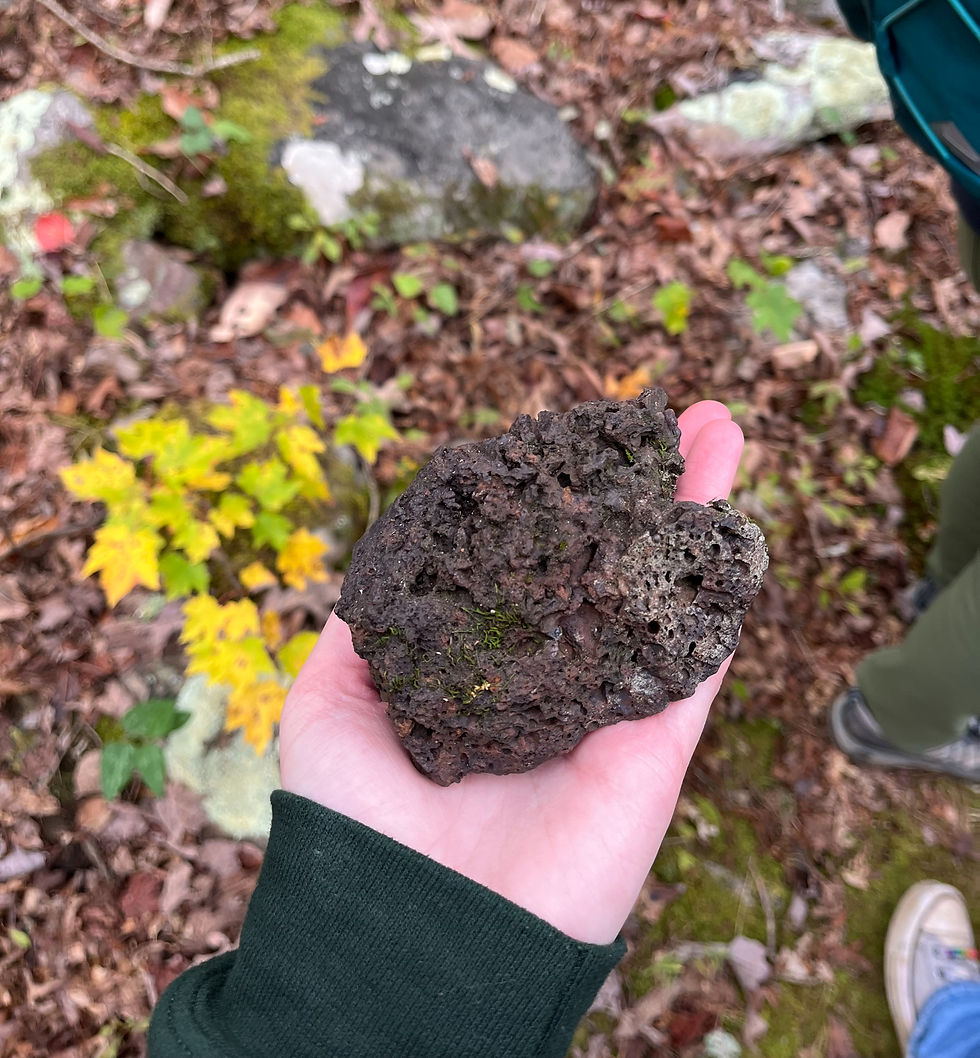
In the middle of October, the beginning of first semester in 2023, the junior class took a field trip to Elizabeth Furnace in Fort Valley. Mr. Kohrs, accompanied by Mrs. Klus and Mrs Bates, took us all the way there with a 45-minute bus drive from Massanutten Regional Governor's School (MRGS) to the furnace location. It was a fantastic ride that created lots of memories. Especially when we had to stop on the mountain for an hour due to an unfortunate event. However, this did not stop us from karaoking on the bus while we waited. When we finally got to the furnace, everyone loaded out of the bus, arms full of equipment, and headed for the restrooms. After the little break, the juniors took a little hike to an open field with a pavilion where all the equipment would wait. We hiked around the furnace as Mr. Kohrs explained the ins and outs of how it used to run back in the day. He also showed us the many iron ore deposits in which many students were lucky enough to snag a piece for themselves. After the little hike around the furnace, we stopped for lunch before collecting data about the trees and merchantable logs using a biltmore stick. Soon after the data had been collected, we packed up the equipment and loaded everyone back into the bus. The drive back to MRGS had a bittersweet feeling. Everyone was happy to be heading back after a long day outdoors and an armful of interesting rocks, but was sad leaving a place where lasting friendships and new memories had been made.

Behind the Scenes
On our long journey to the Elizabeth Furnace, we came across an incident that led to a delay in the trip. A poor lady had driven off of the road and got herself, and her car, stuck within all of the trees. This delay put us an hour behind schedule and cost us time to collect our data. On the way there, we had already been playing a lot of popular songs among the group of teenagers. When we stopped on the road, the energy went up tremendously. The students in the back of the bus were having a blast. They were playing a variety of music genres, these ranged between pop, country, and rap. The man managing the traffic around the accident would periodically come to the bus and give us updates on the progress they were making to retrieve the car from the forest. The wait was long, but it made the trip very memorable, and it was one of those experiences where both classes got to be together for the day. Even though the reason for stopping was very unfortunate, it only bonded us, as the junior class, more than ever.
Once we had surpassed this hour-long stop on the mountain, we proceeded to complete our goals. One of our main objectives for the trip was to learn about the history of iron mining in the Shenandoah Valley and how it affected the forest around the area during the periods of operation. In the 18th-19th centuries, Elizabeth Furnace was primarily run on logs and charcoal; this promoted the act of deforestation in the area. People had to measure the trees in order to figure out how many logs, or cords, they could get from a single tree. Roughly 90 trees with a 14 inch diameter are used to make 30 cords of wood. It could take up to 14 days to produce charcoal from 30 cords and roughly 40 cords of wood would be used in a single day. Charcoal was the only source that would get hot enough to melt the iron. With a high demand for wood, much of the forest was logged and left barren. After production of the furnace seized, the area has been able to recover. Our job was to measure how much the trees have grown since then and determine the amount of merchantable logs that the tree could produce. The use of the biltmore stick made this process quick and easy.
Junior Notes
Noah Bauserman, a student from Mountain View High School, states that “It was really neat to be in such a historic part of the county."
“Elizabeth Furnace was a very gorgeous place to go to. Learning how to measure trees was a very valuable experience and I feel that the trip bonded us as a school,” says Veronica Gutierrez from Harrisonburg High School.
Asher Ryan from Broadway High School recalls the experience being “A good friend building activity.”
A Central High School student, Molly Walsh, says that “It was fun to get to know people a little bit more and hang out with J1’s and J2’s.”
“It was really fun. I really enjoyed it and learning about things that Mr. Kohrs had to say about the rocks and the furnace was really enlightening to me. I thoroughly enjoyed doing that project,” says Joshua Uribe, a student from Spotswood High School.
Kaylee Hatton, from East Rockingham High School, says that “It was good. I really liked the hike and getting outdoors. It was a fun experience.”
Conclusion
While some students were excited to find cool rocks to bring home, others were happy that they had not gotten any poison ivy. All of the juniors can agree that going to Elizabeth Furnace was one of the most memorable experiences that helped students make new friends and talk to people that they hadn’t spoken with before while learning about the environment around them.


Comments